Best Air Purifiers for Wildfire Smoke and Emergency Air Quality (2026)
Find the best air purifier for wildfire smoke in 2026. We compare True HEPA models by CADR, room coverage, and activated carbon filtration — plus how to run them during power outages.
Key Takeaways
- 1True HEPA filters capture 99.97% of wildfire smoke particles — essential when AQI exceeds 150 (Unhealthy)
- 2Coway Airmega 400 is our top pick — covers 1,560 sq ft with dual HEPA filters and low energy consumption
- 3Winix 5500-2 is best value at ~$150 — covers 360 sq ft with PlasmaWave technology and washable pre-filter
- 4Seal windows and doors with plastic sheeting before running air purifiers — filtration is useless if smoky air keeps entering
Introduction
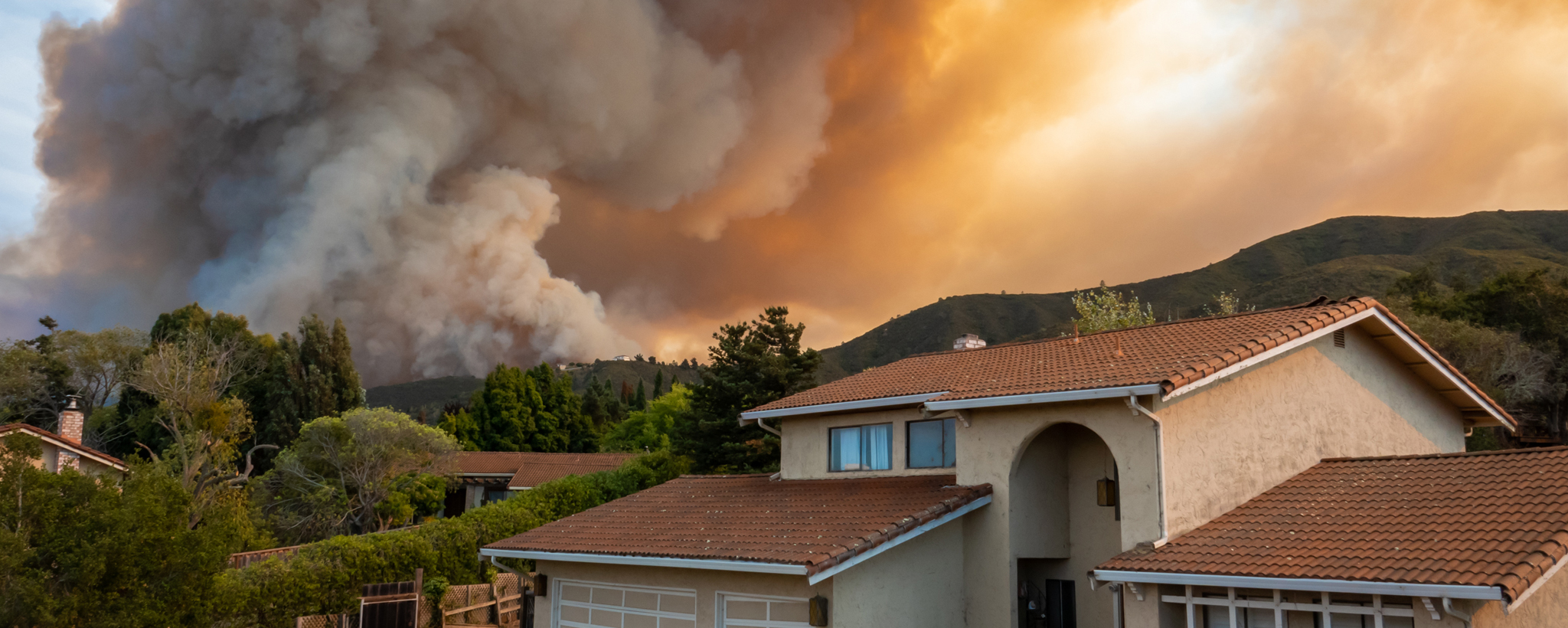
When wildfire smoke settled over the Pacific Northwest and northern California in 2025, AQI readings in some communities exceeded 400 — a level the EPA classifies as "Hazardous." An air purifier equipped with a true HEPA filter is one of the most effective tools available for maintaining indoor air quality during wildfire events.
This guide covers how air purifiers work against wildfire smoke, what specifications actually matter, a comparison of the top models for 2026, and how to power your air purifier during a power outage.
- True HEPA filters capture 99.97% of particles 0.3 microns or larger — the most important spec
- CADR (Clean Air Delivery Rate) tells you how fast a unit cleans a room; match CADR to your room size
- Wildfire smoke particles range from 0.4 to 0.7 microns — within HEPA's effective range
- An activated carbon layer is essential for removing smoke odor and VOCs
- During power outages, a portable solar generator keeps air purifiers running
Why Wildfire Smoke Is Different From Regular Air Pollution
Wildfire smoke is a complex mixture of fine particulate matter (PM2.5 and PM10), carbon monoxide, nitrogen oxides, and hundreds of volatile organic compounds. The particles are predominantly in the PM2.5 range — small enough to penetrate deep into the lungs and enter the bloodstream.
- 0–50 (Good): Air quality is satisfactory. No action required.
- 51–100 (Moderate): Acceptable for most. Sensitive individuals may experience minor irritation.
- 101–150 (Unhealthy for Sensitive Groups): Run air purifier indoors.
- 151–200 (Unhealthy): Keep windows sealed; run air purifier continuously.
- 201–300 (Very Unhealthy): Health alert — avoid prolonged outdoor activity. Seal home and run highest-CADR setting.
- 301–500 (Hazardous): Health emergency. Stay indoors sealed. N95 respirator if going outside.
What to Look for in an Air Purifier for Wildfire Smoke
True HEPA Filtration
The single most important specification. Avoid products labeled "HEPA-type," "HEPA-style," or "HEPA-like" — these don't meet the HEPA standard. Look for H13 or H14 certified filters.
CADR Rating
AHAM recommends a smoke CADR of at least two-thirds of your room's square footage. For wildfire scenarios, err higher: a CADR of 1x or more of your room's square footage provides faster air cleaning.
Activated Carbon
HEPA captures particles but wildfire smoke also contains gaseous VOCs that pass right through particulate filters. Look for units with a substantial activated carbon layer — weight matters. Thicker, granular layers (5+ lbs) offer meaningfully better VOC adsorption.
Top Air Purifiers for Wildfire Smoke: 2026 Comparison
Best Air Purifiers for Wildfire Smoke
| Feature | |||||
|---|---|---|---|---|---|
| Price | ~$499 | ~$249 | ~$279 | ~$299 | ~$899 |
| CADR (Smoke) | 350 CFM | 243 CFM | 410 CFM | 350 CFM | 300 CFM |
| Coverage Area | 1,560 sq ft | 360 sq ft | 635 sq ft | 540 sq ft | 1,125 sq ft |
| HEPA Grade | True HEPA | True HEPA | True HEPA H13 | HEPA-Silent | HyperHEPA |
| Best For | Large rooms, continuous operation | Mid-size rooms, best value | Large rooms, app control | Quiet operation, aesthetics | Medical-grade, highest VOC removal |
~$499
- CADR (Smoke)
- 350 CFM
- Coverage Area
- 1,560 sq ft
- HEPA Grade
- True HEPA
- Best For
- Large rooms, continuous operation
~$249
- CADR (Smoke)
- 243 CFM
- Coverage Area
- 360 sq ft
- HEPA Grade
- True HEPA
- Best For
- Mid-size rooms, best value
~$279
- CADR (Smoke)
- 410 CFM
- Coverage Area
- 635 sq ft
- HEPA Grade
- True HEPA H13
- Best For
- Large rooms, app control
~$299
- CADR (Smoke)
- 350 CFM
- Coverage Area
- 540 sq ft
- HEPA Grade
- HEPA-Silent
- Best For
- Quiet operation, aesthetics
~$899
- CADR (Smoke)
- 300 CFM
- Coverage Area
- 1,125 sq ft
- HEPA Grade
- HyperHEPA
- Best For
- Medical-grade, highest VOC removal
Coway Airmega 400 — Best Overall
The Coway Airmega 400 earns the top pick for most households. Its 350 CFM smoke CADR and dual-fan 4-stage filtration system provides comprehensive coverage for large living areas.
Coway Airmega 400
Pros
- 350 CFM smoke CADR — among the highest in the mid-range category
- 4-stage filtration with substantial activated carbon layer
- Auto mode adjusts to real-time air quality readings
- Quiet enough for continuous bedroom operation (53 dB max)
Cons
- Replacement filters relatively expensive (~$80–100/year)
- Larger footprint; not ideal for very small rooms
- Ionizer can produce trace ozone — recommend disabling during smoke events
Winix 5500-2 — Best Value
The Winix 5500-2 is the most recommended value option, consistently endorsed by Consumer Reports. At ~$249, it offers True HEPA, a washable pre-filter, and activated carbon for rooms up to 360 square feet.
Winix 5500-2
Pros
- Outstanding value — comparable performance to units at twice the price
- True HEPA and activated carbon in a single package
- Washable pre-filter reduces long-term filter costs
- Reliable brand with widely available replacement filters
Cons
- Carbon layer is thinner than premium options; less effective for heavy VOC loads
- 360 sq ft coverage is mid-range — may need two units for large spaces
- Limited smart home integration compared to app-connected competitors
Levoit Core 600S — Best for Large Spaces
The Levoit Core 600S offers the highest CADR at 410 CFM smoke rating. At ~$279, a strong choice for living rooms and combined kitchen/dining areas.
Levoit Core 600S
Pros
- Highest smoke CADR in this comparison (410 CFM)
- H13 True HEPA — slightly higher capture efficiency
- VeSync app integration with voice control
- Competitive pricing relative to CADR output
Cons
- Replacement filter costs run higher than some competitors
- Less established long-term reliability track record
- Taller form factor may not suit all placements
Powering Your Air Purifier During an Outage
Most mid-range air purifiers draw 60–90 watts at high speed. A portable solar generator with 1,000Wh or more can run one continuously for 11–16+ hours — enough for a full night of sheltering during a smoke event.
- 500Wh generator: 5–7 hours (adequate for a single night)
- 1,000Wh generator: 11–14 hours (full overnight + morning)
- 2,000Wh generator: 22–28 hours (covers most shelter-in-place events)
DIY and Low-Cost Air Filtration Options
The Corsi-Rosenthal Box
Developed by researchers at UC Davis and SUNY Oneonta, the Corsi-Rosenthal Box consists of four MERV-13 furnace filters duct-taped around a box fan. At ~$60–90 total cost, it provides CADR comparable to units in the $200–300 range. Check the published test data for its PM2.5 performance.
Room Sealing: The Other Half of the Equation
- Close all windows and doors
- Seal gaps under exterior doors with damp towels or foam weatherstripping
- Cover fireplace dampers or seal with tape
- Turn off whole-house ventilation fans
- Set HVAC to recirculate mode if available
- Concentrate in one or two sealed rooms with your air purifier
Frequently Asked Questions
Do air purifiers actually work against wildfire smoke?
Yes — with True HEPA filtration and appropriate sizing. Portable HEPA air cleaners are widely used to reduce indoor PM2.5 during wildfire smoke events. Units with only UV or ionization (without HEPA) offer much less protection.
How often do I need to replace filters during wildfire season?
Much more frequently than normal use. Activated carbon can become saturated within days of continuous heavy smoke. Inspect monthly and replace when discolored or when odor reduction diminishes.
Should I buy an air purifier now or wait for wildfire season?
Buy before you need it. Air purifiers sell out rapidly when smoke events occur. Purchasing in spring provides best availability and price.
Coway Airmega 400
Best overall air purifier for wildfire smoke. Dual HEPA filters and 1,560 sq ft coverage make it ideal for whole-room or open-plan living protection.
Winix 5500-2
Best value air purifier for smoke. PlasmaWave technology and washable pre-filter keep ongoing costs low. Perfect for bedrooms and home offices.
Frequently Asked Questions
Bottom Line
The Coway Airmega 400 is best for large living areas, while the Winix 5500-2 offers excellent protection at a more accessible price. Pair your air purifier with a portable solar generator so you maintain clean indoor air even during power outages.
Where to Buy
We may earn a commission when you purchase through these links, at no extra cost to you. This helps pay for the site.