Best Home Battery Backup Systems: Solar + Storage for Grid Independence (2026)
The top solar + battery backup systems for 2026 compared: capacity, solar input, cost, and IRA tax credit eligibility.
Key Takeaways
- 1EcoFlow Delta Pro Ultra is best overall home battery — expandable to 90kWh with 7,200W output and smart home integration
- 2Bluetti AC300 + B300 offers the best modular approach — separate inverter and battery allow flexible installation
- 3The 30% IRA federal tax credit applies to qualifying solar + battery systems, saving $900+ on a $3,000 purchase
- 4Plan for 5,000-10,000Wh total capacity for true whole-home backup including HVAC and major appliances
Best Home Battery Backup Systems: Solar + Storage for Grid Independence (2026)
Spain lost 60% of its grid in five seconds in April 2025. Winter Storm Fern produced 750,000 US outages in January 2026. Average outage duration is 12.8 hours and rising. For most households, a home battery backup system paired with solar panels is the most practical response.
- Home battery systems range from portable (~$800–$2,000) to whole-home ($8,000–$25,000+).
- The 30% federal IRA Residential Clean Energy Credit applies to solar and battery storage in 2026.
- EcoFlow Delta Pro Ultra is our top pick: scalable to 21.6kWh, 5,600W solar input, UPS mode.
- Jackery Explorer 2000 Plus and Bluetti AC300+B300 offer strong portable/mid-range value.
- NREL data shows solar + storage provides 3–6x better resilience than solar-only during multi-day outages.
Quick Comparison: Top Home Battery Backup Systems
Top 4 Home Battery Backup Systems (2026)
| Feature | ||||
|---|---|---|---|---|
| Price | ~$5,099 | ~$2,799 | ~$1,799 | ~$1,399 |
| Capacity | 6,144Wh (to 21.6kWh) | 3,072Wh (to 12,288Wh) | 2,042Wh (to ~12kWh) | 983Wh |
| Solar Input | Up to 5,600W | Up to 2,400W | Up to 3,000W | Up to 600W |
| Best For | Whole-home backup | Scalable family storage | Portability + capacity | Budget entry |
~$5,099
- Capacity
- 6,144Wh (to 21.6kWh)
- Solar Input
- Up to 5,600W
- Best For
- Whole-home backup
~$2,799
- Capacity
- 3,072Wh (to 12,288Wh)
- Solar Input
- Up to 2,400W
- Best For
- Scalable family storage
~$1,799
- Capacity
- 2,042Wh (to ~12kWh)
- Solar Input
- Up to 3,000W
- Best For
- Portability + capacity
~$1,399
- Capacity
- 983Wh
- Solar Input
- Up to 600W
- Best For
- Budget entry
Why Home Battery Backup Matters More in 2026
Rising outage duration: EIA data shows 12.8 hours average — up significantly. Weather, infrastructure age, and EV/data center load all contribute.
Cyberattack risk: CISA's Volt Typhoon advisories document persistent state-sponsored access in US utility networks.
European precedent: The April 2025 Iberian blackout showed even modern grids can cascade catastrophically.
The IRA Tax Credit in 2026
The Inflation Reduction Act's 30% Residential Clean Energy Credit applies to solar panels and battery storage (≥3kWh) installed in a primary residence.
The 30% credit steps down to 26% in 2033 and 22% in 2034. For 2026, the full 30% applies. Battery-only systems (≥3kWh) became eligible in 2023. Verify with a tax advisor.
Our Top Pick: EcoFlow Delta Pro Ultra
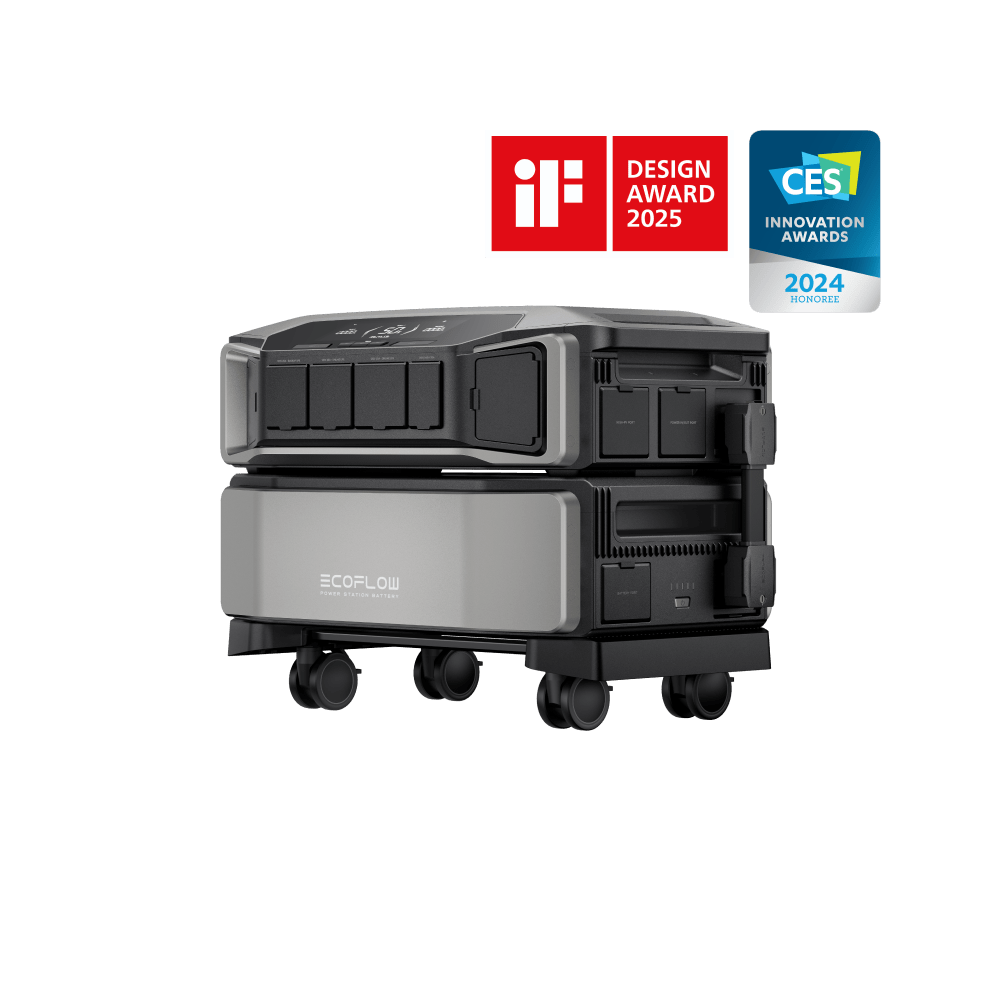
The EcoFlow Delta Pro Ultra provides 6,144Wh base expandable to 21.6kWh. It accepts 5,600W of solar input. Smart Home Panel 2 integration enables circuit-level backup without rewiring.
EcoFlow Delta Pro Ultra
Pros
- 6,144Wh base expandable to 21.6kWh — whole-home capable for 1–3 days
- 5,600W solar input: fastest solar recharge in this class
- Smart Home Panel 2 enables circuit-level backup
- LFP battery: 3,500+ cycles (~10+ year lifespan)
- Bidirectional EV charging capable
Cons
- Base unit ~$5,099 before accessories
- 123 lbs — semi-permanent installation, not portable
- Full integration requires licensed electrician
Best for Families: Bluetti AC300 + B300
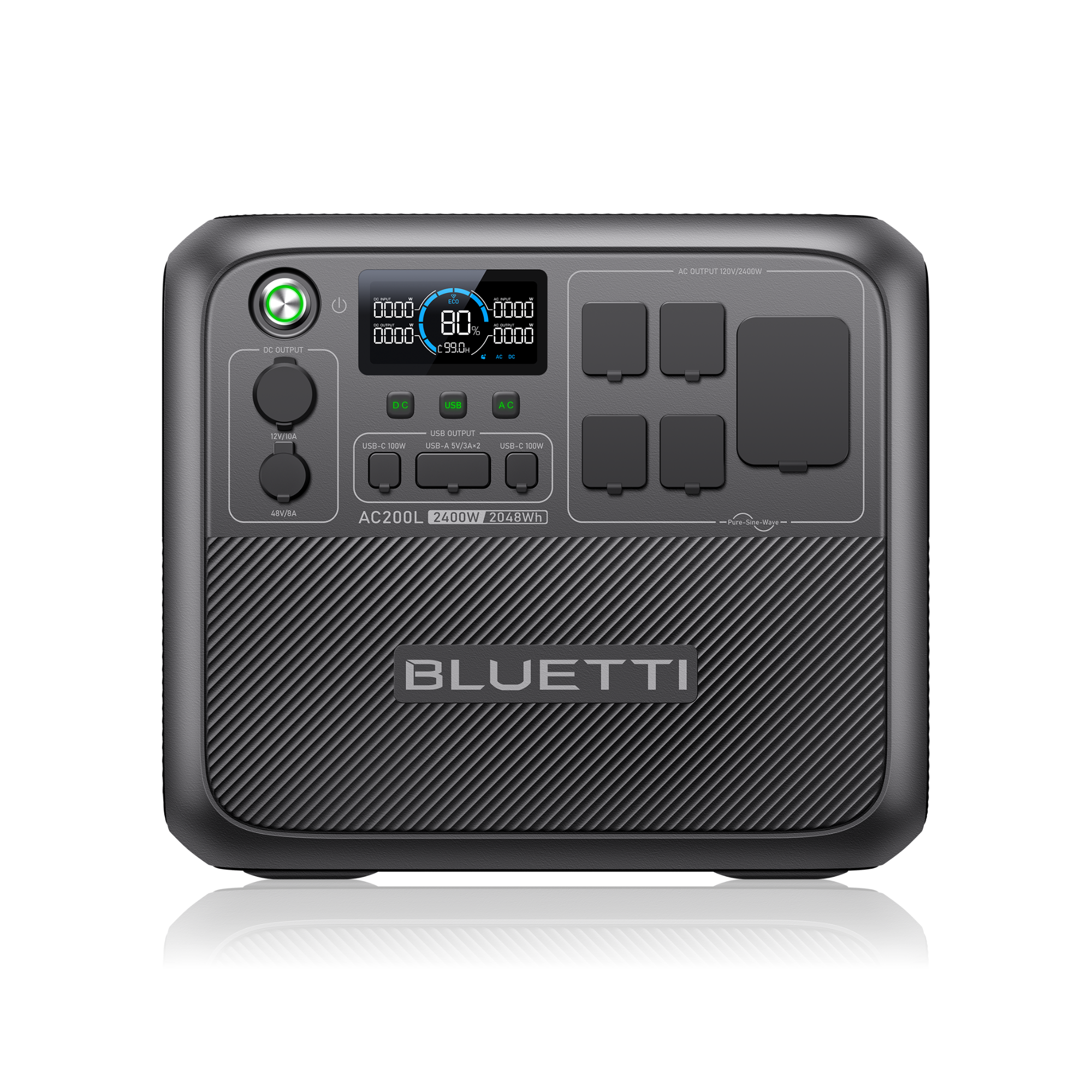
The Bluetti AC300 + B300 offers 3,072Wh base expandable to 12,288Wh. Start at ~$2,799 and add modules later. 24 output ports plus NEMA 14-50 and 30A RV outlets.
Bluetti AC300 + B300
Pros
- Modular: 3,072Wh to 12,288Wh with additional batteries
- 24 output ports covering AC, DC, USB-A, USB-C, 12V
- Highest capacity-per-dollar at this price point
- 2,400W solar input — competitive for mid-range
Cons
- AC300 alone is not useful — must buy B300 module
- 3,000W continuous can't run large HVAC without load management
- App connectivity has received mixed reliability reviews
Best Portable: Jackery Explorer 2000 Plus
The Jackery Explorer 2000 Plus at 2,042Wh and 38 lbs is genuinely portable. Its 3,000W solar input is exceptional for a portable unit. Expandable to ~12kWh.
Jackery Explorer 2000 Plus
Pros
- 38 lbs: genuinely portable — carries like a suitcase
- 3,000W solar input: best-in-class for portable units
- LFP battery: ~3,000 cycles
- Strong SolarSaga panel ecosystem and well-reviewed app
Cons
- 2,042Wh may fall short for multi-day whole-home backup without solar
- Expansion requires Jackery-specific battery packs
- 3,000W continuous output — can't run large central HVAC
Best Budget Entry: Goal Zero Yeti 1000X
The Goal Zero Yeti 1000X at 983Wh is a single-appliance backup. Proven brand, polished software, robust Boulder solar panel ecosystem, and 1,500W output.
Goal Zero Yeti 1000X
Pros
- Proven brand with long track record and strong support
- MPPT charge controller maximizes solar efficiency
- Clean app and LCD — easy for first-time users
- 983Wh sufficient for phone, lighting, CPAP, small fridge over 24–48 hours
Cons
- 600W max solar input — significantly lags competitors
- No expandability: can't add batteries
- Higher price-to-capacity ratio than alternatives
Full Specification Comparison
Detailed Battery Backup Specs
| Feature | ||||
|---|---|---|---|---|
| Price | ~$5,099 | ~$2,799 | ~$1,799 | ~$1,399 |
| Capacity | 6,144Wh (to 21.6kWh) | 3,072Wh (to 12,288Wh) | 2,042Wh (to ~12kWh) | 983Wh |
| Output | 7,200W (surge) | 3,000W | 3,000W | 1,500W |
| Solar Input | 5,600W | 2,400W | 3,000W | 600W |
| Battery | LFP (3,500 cycles) | LFP (3,500 cycles) | LFP (3,000 cycles) | NMC (500 cycles) |
| Weight | 123 lbs | 64 lbs (AC300) | 38 lbs | 22 lbs |
~$5,099
- Capacity
- 6,144Wh (to 21.6kWh)
- Output
- 7,200W (surge)
- Solar Input
- 5,600W
- Battery
- LFP (3,500 cycles)
- Weight
- 123 lbs
~$2,799
- Capacity
- 3,072Wh (to 12,288Wh)
- Output
- 3,000W
- Solar Input
- 2,400W
- Battery
- LFP (3,500 cycles)
- Weight
- 64 lbs (AC300)
~$1,799
- Capacity
- 2,042Wh (to ~12kWh)
- Output
- 3,000W
- Solar Input
- 3,000W
- Battery
- LFP (3,000 cycles)
- Weight
- 38 lbs
~$1,399
- Capacity
- 983Wh
- Output
- 1,500W
- Solar Input
- 600W
- Battery
- NMC (500 cycles)
- Weight
- 22 lbs
Cycle rating note: Goal Zero uses NMC (500 cycles). LFP units are rated for 3,000–3,500 cycles. Over 10 years, LFP's longer lifespan often results in lower total cost.
Cost After IRA Tax Credit
- EcoFlow Delta Pro Ultra (~$5,099) → ~$3,569 net
- Bluetti AC300 + B300 (~$2,799) → ~$1,959 net
- Jackery Explorer 2000 Plus (~$1,799) → ~$1,259 net (confirm eligibility)
- Goal Zero Yeti 1000X (~$1,399) → below 3kWh minimum, credit does not apply
How Much Capacity Do You Need?
Essential-only (lights, phones, CPAP): ~250–300Wh/day. A 1,000Wh unit covers ~3 days without recharge.
Extended (+ refrigerator): ~400–500Wh/day with modern fridge. A 2,000Wh unit provides ~4 days.
Whole-home (HVAC, water pump): 3,000W+ output, 6,000Wh+ capacity. EcoFlow Delta Pro Ultra territory.
Solar Panel Pairing
NREL shows solar + storage provides 3–6x better resilience than battery-only. Panel wattage × peak sun hours = daily generation.
- 400W panels → ~1,600Wh/day (4 peak sun hours)
- 800W panels → ~3,200Wh/day
- 1,200W panels → ~4,800Wh/day
Frequently Asked Questions
What is the best home battery backup for a typical family?
Jackery Explorer 2000 Plus or Bluetti AC300 + B300 for most families. For whole-home, EcoFlow Delta Pro Ultra.
Can I get a tax credit for a battery backup system?
Yes. The IRA's 30% credit applies to battery systems with ≥3kWh capacity installed in a primary residence in 2026.
What is the difference between LFP and NMC batteries?
LFP lasts 3,000–3,500 cycles vs. 500 for NMC, is more thermally stable, and maintains better capacity over time. NMC is lighter but degrades faster.
How long will 2,000Wh power a refrigerator?
A modern efficient fridge (100–150Wh/day) can run 13–20 days on 2,000Wh. An older model (400Wh/day): about 5 days.
EcoFlow Delta Pro Ultra
The most capable home battery system available. Expandable to 90kWh for complete grid independence with solar recharging.
Bluetti AC300 + B300
Best modular system with separate inverter and battery units. Excellent flexibility for different home layouts and evolving needs.
Frequently Asked Questions
Bottom Line
For most families, the Jackery Explorer 2000 Plus is the best starting point. For more capacity, the Bluetti AC300 + B300 offers modular expansion. For whole-home coverage, the EcoFlow Delta Pro Ultra is in a class of its own.
The IRA's 30% credit won't last forever, outage durations are trending upward, and solar + storage pays back in resilience, energy independence, and peace of mind.
Where to Buy
We may earn a commission when you purchase through these links, at no extra cost to you. This helps pay for the site.